LMBDA Research & Insights | Mobility | November 11, 2026
A California company best known for upgrading Teslas has offered to take over production of the Cybertruck as Elon Musk shifts Tesla's manufacturing priorities toward the Cybercab. On November 10, Unplugged Performance published an open proposal to fund and operate a Cybertruck production program through a consortium of investors, while leaving Tesla's factory capacity, employees and battery allocation focused on autonomous vehicles.
The offer is real, but the deal is not. As of November 11, there is no confirmed agreement with Tesla, no named financing consortium, no disclosed production site and no signed licensing terms. The story matters because it exposes a difficult strategic question: can an independent specialist keep an unconventional vehicle alive when its original manufacturer wants to use the same resources for a different business?
What Unplugged Performance offered Tesla
In its public November 10 message, Unplugged Performance said it would take over Cybertruck manufacturing without using Tesla's factory floor space or headcount. It proposed financing the effort through outside investors and letting Cybercab production take priority for battery cells. Tesla would receive licensing revenue and, under the proposed arrangement, potentially benefit from Full Self-Driving and Robotaxi network services associated with the vehicles produced.
The company also suggested two additional vehicles: a three-row CyberSUV and an unmanned CyberCargo hauler. These are aspirations within the proposal, not announced Tesla products or confirmed production programs.
The offer was reported by Teslarati on November 10, with independent reporting from Electrek and TeslaNorth. The underlying public statement is attributable to Unplugged Performance, not to Tesla.
Why the proposal arrived now
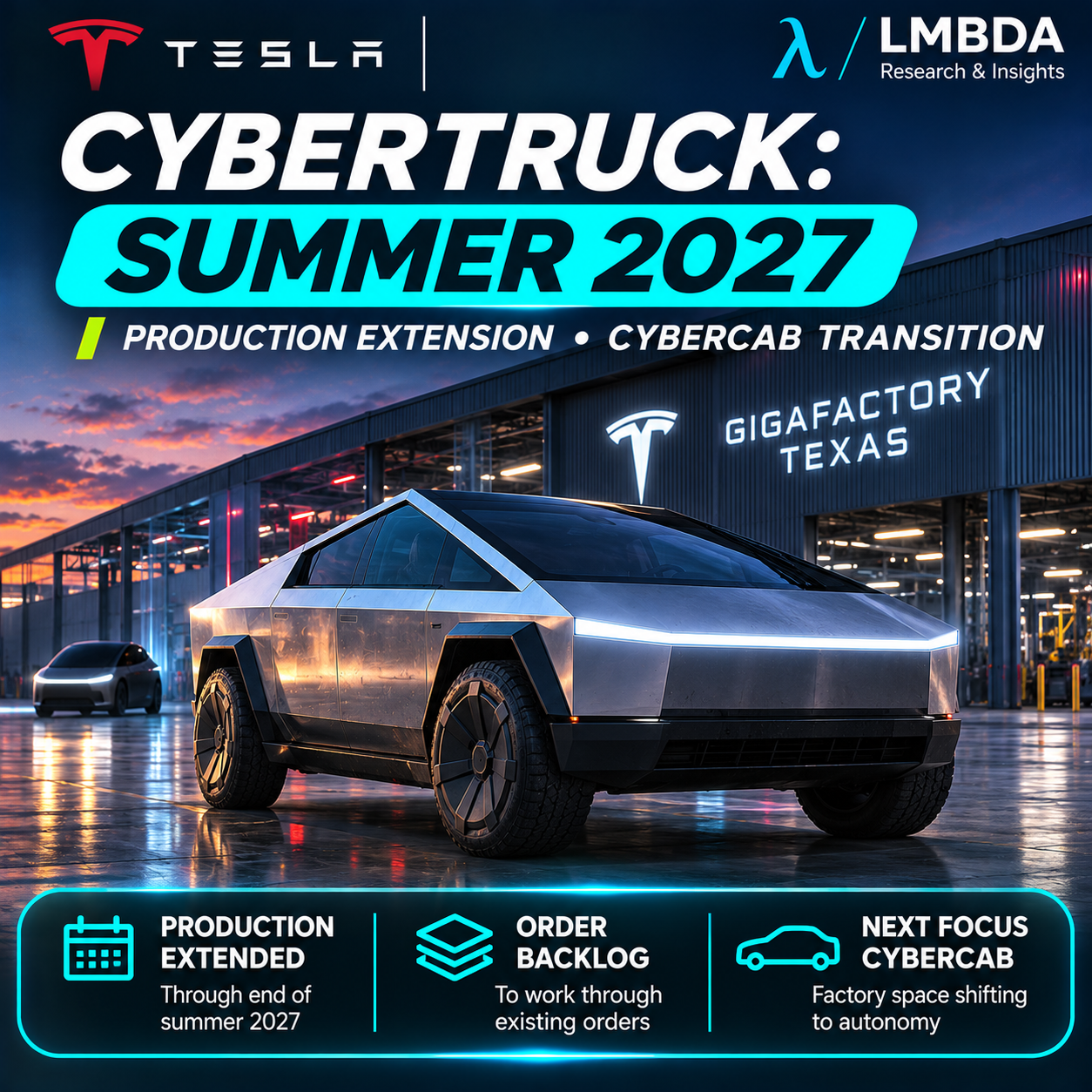
The offer follows reporting that Tesla intends to wind down Cybertruck production at Gigafactory Texas around June or July 2027 and redeploy capacity toward Cybercab. Reuters reported on November 10 that Musk described an effort to work through an order backlog before ending the pickup's production. The reported change would mark a major shift for a vehicle that Tesla once expected to produce in much greater numbers.
Reuters cited estimated Cybertruck sales of roughly 11,600 units through September 2026, down 28% year over year. That is far below Musk's earlier annual production ambitions of 250,000 units. These figures are estimates and historical targets, not evidence that a new operator could profitably manufacture the vehicle at current demand levels.
Cybercab, meanwhile, represents Tesla's effort to allocate more engineering, manufacturing and capital toward autonomous mobility. The commercial viability, timing and scale of that business remain separate questions. Unplugged's pitch is designed to avoid forcing Tesla to choose between keeping the Cybertruck program and pursuing its Cybercab priorities.
Who is Unplugged Performance?
Founded in 2013 by Ben Schaffer, Unplugged Performance is a Hawthorne, California-based Tesla aftermarket specialist. Its products include performance, suspension and protection upgrades, as well as the UP INVINCIBLE range for Cybertruck owners. Through its UP.FIT division, it has also developed vehicles for police and fleet customers, including Cybertruck conversions associated with the Las Vegas Metropolitan Police Department.
That background gives the company experience with the platform and a commercial reason to want the vehicle to survive. But modifying completed vehicles is fundamentally different from building them. An original-equipment manufacturer must manage supplier qualification, factory processes, safety certification, warranty liabilities, quality assurance, recalls and production financing. A successful aftermarket business does not automatically possess all of those capabilities.
How could Tesla make money without building the truck?
The proposal resembles a licensing arrangement: Unplugged Performance would operate manufacturing, while Tesla would retain rights and collect payments associated with the brand, vehicle technology and potentially connected services. In principle, this could let Tesla monetize existing intellectual property without dedicating its own production line to the Cybertruck.
However, the economics are still undefined. No license fee, royalty percentage, per-vehicle software revenue, investor commitment or production target has been publicly established in the reports reviewed. Tesla would also need to decide which technology, software, trademarks and supplier relationships it would license, under what conditions and with what obligations.
The assertion that the plan would cost Tesla no factory space or headcount is a statement of intent from the bidder. It is not a verified engineering or financial outcome. Transferring a complex vehicle program can require substantial technical cooperation, tooling access, software integration and ongoing oversight even if final assembly happens elsewhere.
CyberSUV and CyberCargo: ideas, not confirmed launches
Unplugged Performance's proposal extends beyond continuing the pickup. It imagines a three-row SUV using the Cybertruck platform and an unmanned cargo vehicle for autonomous logistics. Both could theoretically broaden the number of customers served by the platform, but neither has an announced production specification, pricing, regulatory approval or delivery schedule.
A passenger SUV would require its own engineering, packaging, crash-safety validation and market assessment. An unmanned cargo vehicle would face additional operational and regulatory challenges, especially if deployed on public roads. The existence of an idea in a public offer should not be confused with a functioning prototype or a Tesla-backed product roadmap.
Five hurdles before an independent Cybertruck line could exist
1. Tesla's consent and intellectual property
The proposal cannot proceed without Tesla agreeing to a suitable transfer or licensing structure. Vehicle designs, software systems, trademarks and manufacturing know-how are not automatically available to a third party.
2. Funding and a production facility
Unplugged says investors could finance the effort, but it has not identified a completed funding round, capital commitments or a manufacturing location. Its follow-up invitation for investor interest was expressly framed as an exploratory outreach rather than a securities offering or acceptance of funds.
3. Tooling, suppliers and battery access
A manufacturing operation would need access to production equipment and validated parts. Giving Cybercab priority for batteries could reduce conflict with Tesla but might also constrain Cybertruck production volume and delivery schedules.
4. Certification, software and liability
Who would be the legal manufacturer? Who would certify compliance, provide warranties, issue recalls and maintain safety-critical software? A licensing agreement would have to address these questions before any vehicles could be delivered to customers.
5. Demand and sustainable economics
The Cybertruck's relatively modest sales make the business case uncertain. A smaller specialist might operate differently from Tesla, but a lower-volume production model can carry higher per-unit costs. The proposal has not yet demonstrated how its volumes, prices and costs would balance.
What the offer means for existing Cybertruck owners
For now, nothing has changed. The public proposal does not transfer warranties, modify service agreements, establish a new parts supplier or guarantee future production. Owners should continue to rely on Tesla's official service, warranty and recall information.
If a deal is eventually announced, the most important owner questions will concern long-term parts supply, service responsibilities, software updates, warranty coverage and whether any future vehicles would be built to the same specifications as existing Cybertrucks. None of those outcomes can be inferred from the November 10 message.
What to watch next
The first decisive development would be a response from Tesla confirming whether it is willing to discuss the proposal. A credible next stage would include identified financial backers, a manufacturing location, an outline of intellectual-property rights and a realistic production schedule. Regulatory filings, signed agreements and official statements would provide stronger evidence than social-media enthusiasm.
Until then, the correct description is an unsolicited public offer. Calling it an acquisition, a factory transfer or a confirmed Cybertruck rescue would overstate the available evidence.
Frequently asked questions
Has Unplugged Performance bought the Cybertruck production line?
No. It made a public proposal on November 10, 2026. No accepted offer or signed transaction has been confirmed.
Is Tesla definitely ending Cybertruck production in 2027?
Reuters and automotive outlets report that Tesla plans to wind down production around mid-2027 as it prioritizes Cybercab. Plans may change, and the precise operational timetable should be checked against subsequent Tesla announcements.
Would Tesla still receive money from the Cybertruck?
Under Unplugged's proposed structure, Tesla would receive licensing fees and potentially revenue connected to FSD and Robotaxi services. No financial terms have been agreed publicly.
Who would pay to keep the production line running?
Unplugged Performance says a consortium of investors would fund the program, but no confirmed capital amount or named group of committed investors has been disclosed.
Are the CyberSUV and CyberCargo real Tesla models?
They are proposed extensions of the platform mentioned by Unplugged Performance, not confirmed production vehicles.
Would existing Cybertruck warranties change?
There is no announced change. The public proposal does not alter existing owners' contractual rights or Tesla's current obligations.
Could Unplugged manufacture Cybertrucks outside Tesla's factory?
That is its stated ambition. Whether it can secure a facility, tooling, components, regulatory compliance and sufficient financing remains unproven.
The bigger question is who owns the future of a vehicle platform
Unplugged Performance's offer is unusual because it separates the commercial life of a vehicle from the priorities of the company that created it. Tesla appears increasingly focused on autonomous mobility, while an aftermarket specialist sees enough value in the Cybertruck platform to propose continuing it independently.
That is an intriguing industrial idea, not yet an industrial agreement. If Tesla responds and the economics become visible, the proposal could become a case study in vehicle-platform licensing. If it goes nowhere, it will still reveal how strongly some partners and owners want the Cybertruck to survive. For now, the only confirmed development is the public offer itself.
Sources
- Teslarati — Tesla upfitter offers to keep Cybertruck alive, November 10, 2026
- Electrek — Tesla tuner Unplugged offers to take over Cybertruck production, November 10, 2026
- TeslaNorth — Unplugged Performance Offers to Take Over Tesla's Cybertruck Line, November 10, 2026
- Reuters — Tesla Cybertruck is EV pickup market's latest casualty, November 10, 2026
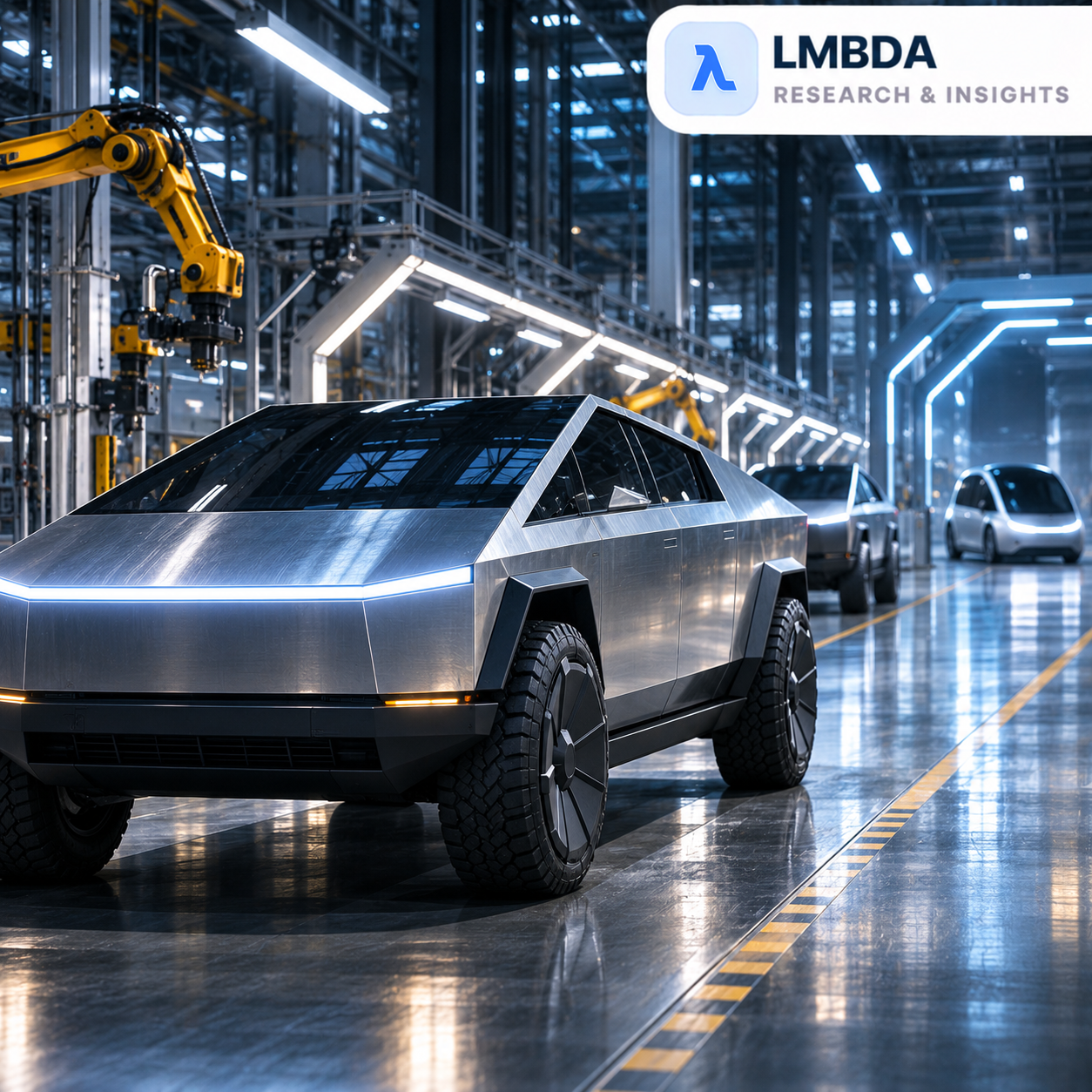
Cover image: an illustrative reconstruction of a futuristic electric pickup production facility, not a photograph of an actual Unplugged Performance factory or an approved Tesla production transfer.